Table of Contents
If you are planning to buy an iPhone, you may notice that the same iPhone model is often available from different countries. This is especially common in India, where some buyers consider purchasing a US iPhone because of pricing, availability, or because a friend or family member is bringing one from the United States.
But is a US iPhone the same as an India iPhone?
The overall iPhone experience may be similar, but there can be important differences in SIM support, eSIM availability, carrier locking, cellular connectivity, model numbers, and warranty or service options.
These differences also depend on the iPhone generation you are buying. A difference that applies to an iPhone 14 may not necessarily apply in exactly the same way to a newer model.
In this guide, we will explain the important differences between US and India iPhones and help you decide which version is better for your needs.
Quick Answer: US iPhone vs India iPhone
For many users, both US and India iPhones can provide a similar everyday experience. However, the biggest practical difference is often the SIM configuration.
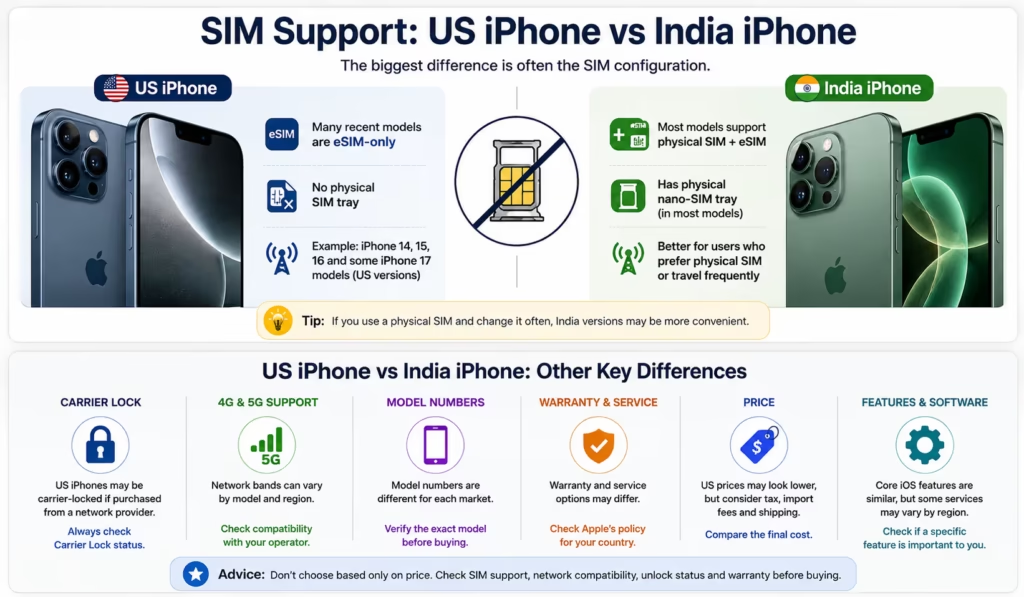
Several recent iPhone models purchased in the United States are eSIM-only, which means they do not have a physical nano-SIM tray. Depending on the model, an India version may support both a physical nano-SIM and eSIM.
A US iPhone may work in India if it is carrier-unlocked and compatible with the network you want to use. However, if you depend on physical SIM cards, frequently change SIMs, or travel to places where eSIM support is limited, you should carefully check the exact model before buying.
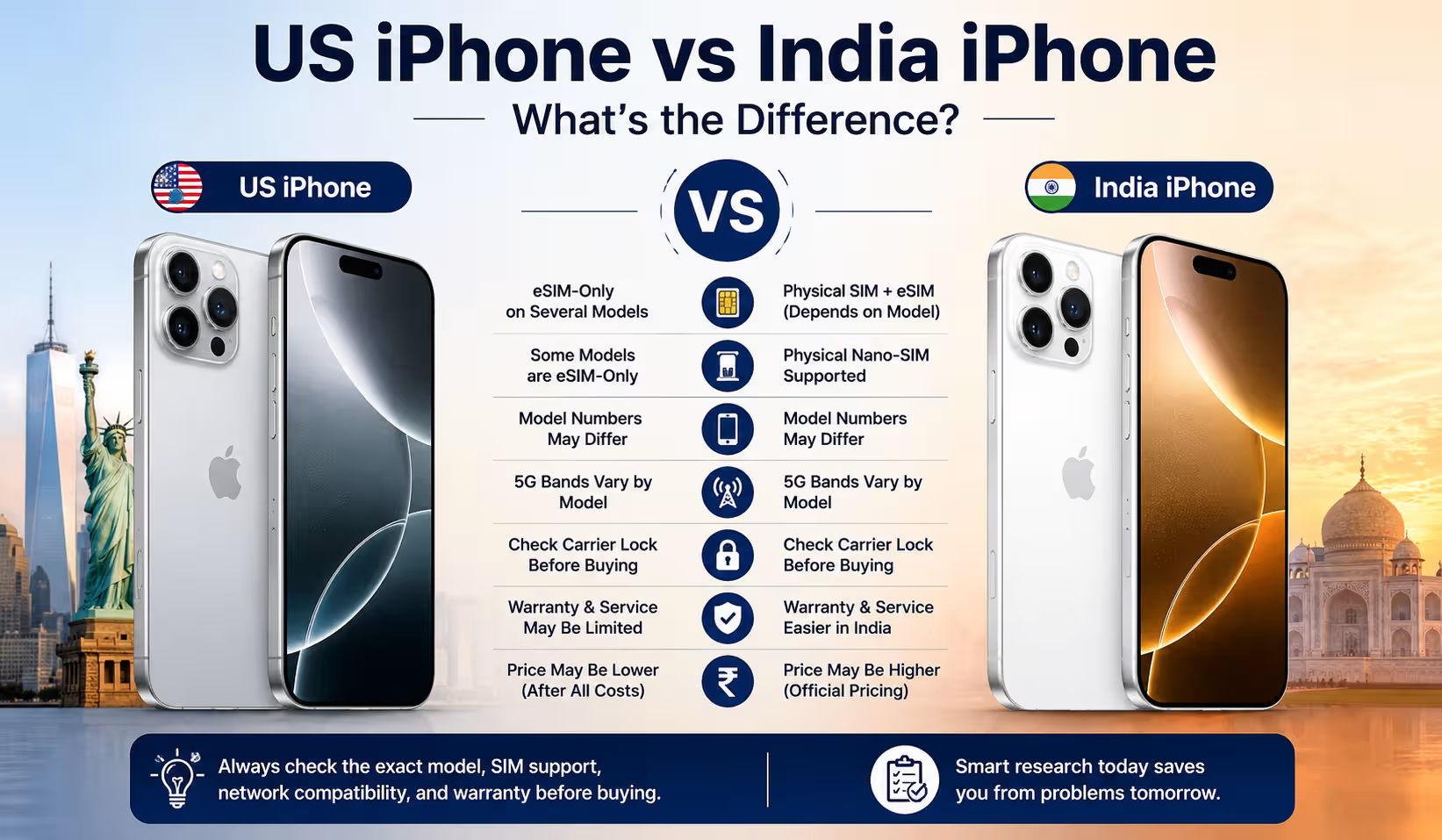
Here is a simple overview:
| Feature | US iPhone | India iPhone |
|---|---|---|
| Overall iOS experience | Similar | Similar |
| Apple apps and features | Generally similar | Generally similar |
| Physical SIM | Depends on model; several recent models are eSIM-only | Depends on model |
| eSIM | Supported on compatible models | Supported on compatible models |
| Carrier lock | Possible, especially with carrier-sold devices | Check before buying |
| 4G/5G | Model-specific | Model-specific |
| Model number | May differ | May differ |
| Warranty/service | Check eligibility before importing | Local purchase may be simpler for service |
The exact specifications can change by iPhone generation, so always verify your specific model before making a purchase.
1. The Biggest Difference: SIM and eSIM Support
For most buyers comparing a US iPhone with an India iPhone, this is the first thing to check. Many people in India still use physical nano-SIM cards. If you buy an iPhone that does not have a physical SIM tray, you cannot simply remove the SIM card from your old phone and insert it into your new iPhone. You will need to activate an eSIM instead. Several recent iPhone generations sold in the United States have been available as eSIM-only models. For example, the US versions of the following generations include eSIM-only models:
- iPhone 14 series
- iPhone 15 series
- iPhone 16 series
- Newer iPhone 17 generation models
SIM configurations can vary by generation and purchase region, so don’t use this list alone to make a buying decision. Check Apple’s current specifications for the exact model you plan to purchase. This difference may not matter if you already use eSIM and your mobile carrier fully supports it. However, it can be important if you:
- Prefer physical SIM cards
- Frequently move your SIM between phones
- Use local SIM cards while travelling
- Keep multiple phones and swap SIMs regularly
- Use a mobile operator with limited eSIM support
My advice: Before buying an imported iPhone, decide whether you are comfortable relying on eSIM. Don’t wait until after purchasing the phone to check.
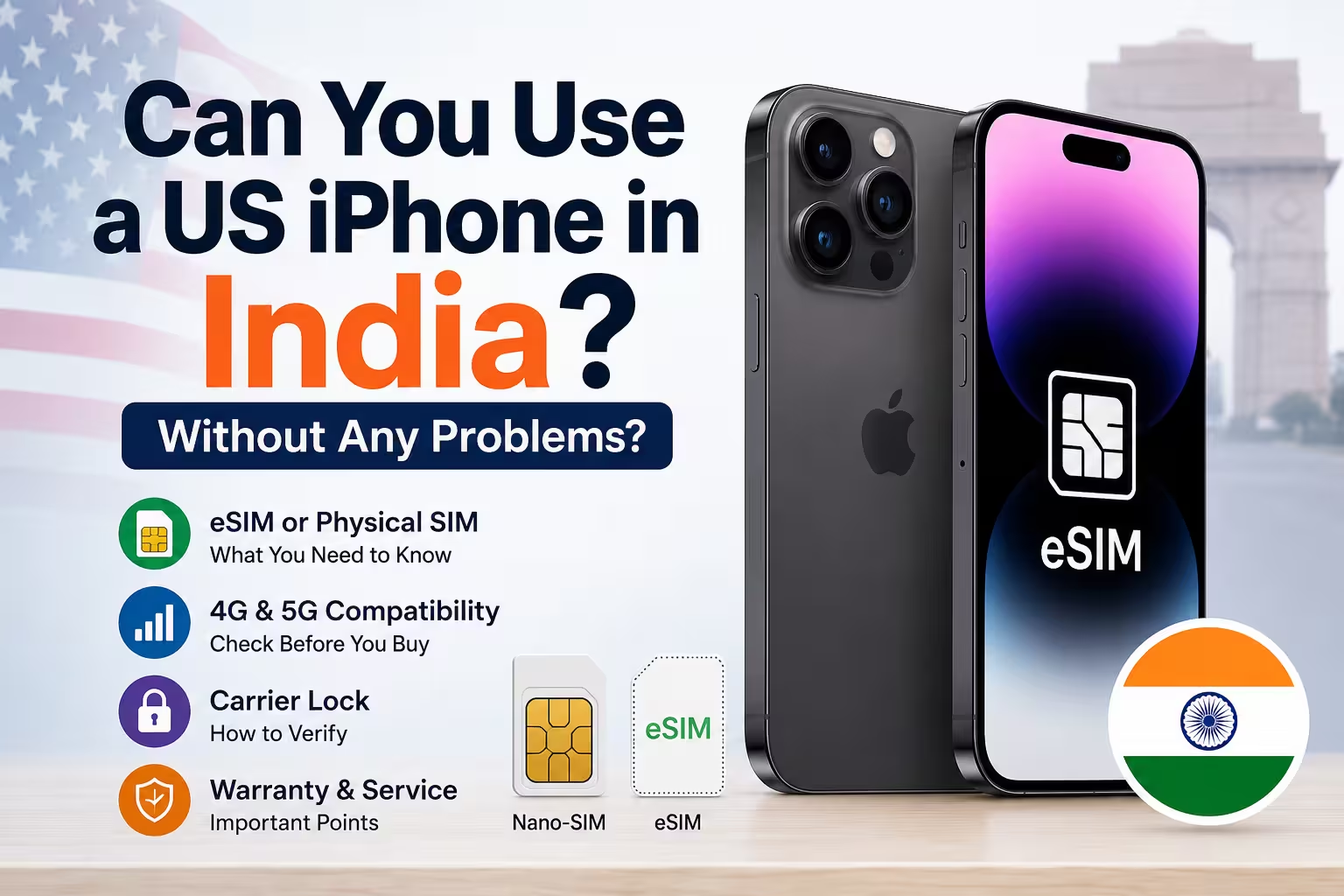
2. Can You Use a US iPhone in India?
In general, a compatible and carrier-unlocked US iPhone can be used in India. However, you should check three things first:
- The phone’s carrier-lock status
- Its SIM or eSIM configuration
- Its compatibility with your mobile network
If your US iPhone is eSIM-only, you will need a compatible eSIM service from your Indian mobile operator. If you are specifically planning to import a US model, read our detailed guide on Can You Use a US iPhone in India? It explains the potential issues you should check before purchasing. This is especially important when buying a used or refurbished US iPhone.
3. Physical SIM Support
An India-market iPhone may be more convenient for users who want to continue using a physical SIM card, depending on the specific model. With a physical SIM, you can usually remove the SIM card and insert it into another compatible phone when needed. With an eSIM, switching devices may involve a digital transfer or activation process. For many people, this is not a major issue. In fact, eSIM can be very convenient once it is properly set up. But the best option depends on how you use your phone. If you rarely change phones or SIM cards, an eSIM-only US iPhone may work perfectly well for you. If you regularly swap SIM cards between multiple devices, a model with a physical SIM tray may be more practical.
4. Check Whether the US iPhone Is Carrier-Locked
This is one of the most important checks when buying a US iPhone. Some iPhones sold in the United States are purchased through mobile carriers. Depending on how the device was purchased and the carrier’s policies, the phone may be locked to that carrier. A carrier-locked iPhone can create problems if you want to use another mobile network. If you already have the iPhone, you can check its status by going to:
Settings > General > About
Look for Carrier Lock.
If you see No SIM restrictions, the iPhone is generally unlocked. If you are buying a used or refurbished US iPhone, ask the seller to confirm the carrier-lock status before paying. Do not assume that every US iPhone is automatically unlocked.
My advice: If you are importing an iPhone, buying a clearly identified unlocked model is usually the safer choice.
5. US iPhone vs India iPhone: 4G and 5G Differences
Both US and India iPhones can support modern cellular networks, but cellular specifications may differ between regional models. The same iPhone generation can have different model numbers for different markets. Those models may support different combinations of cellular bands or technologies. This does not automatically mean that a US iPhone will have network problems in India. It means you should verify compatibility rather than assuming every regional model is identical.
Before buying, check:
- Exact iPhone model number
- Supported LTE bands
- Supported 5G bands
- Your mobile operator’s network requirements
If you plan to use the iPhone in another country, check compatibility with the network you expect to use there as well.
This advice applies not only to India but to anyone buying an iPhone from another country.
6. Does a US iPhone Have Better 5G?
You may hear that US iPhones are “better” because some regional models support additional 5G technologies or bands. That does not automatically make a US iPhone better for every user. A cellular feature is useful only when your mobile operator and location support it. For example, additional network capabilities designed for the US market may provide little practical benefit if the network you use in another country does not rely on them. Therefore, don’t choose a US iPhone only because its specifications appear to include more network bands.Choose the version that is compatible with the networks you actually use.
7. Are the Camera and Performance Different?
If you compare equivalent versions of the same iPhone generation, you generally should not expect a major difference in everyday performance simply because one was purchased in the US and the other in India. The processor, iOS experience, cameras, apps, and core features are generally based on the same iPhone generation. The more important regional differences are usually related to areas such as:
- SIM configuration
- Cellular connectivity
- Model numbers
- Region-specific features or restrictions
- Carrier status
However, always compare the exact model numbers when purchasing an imported device rather than assuming that every regional variant is identical.
8. What About FaceTime?
There is sometimes confusion about whether imported iPhones support FaceTime. For a US vs India comparison, FaceTime is generally not the main difference most buyers need to worry about. However, some iPhone features and services can depend on the country or region, local regulations, account settings, or software configuration. If a specific feature is essential to you, verify its current availability for the exact country where you plan to use the device. This is particularly important when comparing iPhones from several different international markets rather than only the US and India.
9. Warranty and Service in India
Warranty and repair support should be considered before buying an imported iPhone. Do not assume that buying an iPhone in one country automatically guarantees identical service options in every other country. Service eligibility can depend on the product, model, parts availability, Apple’s current policies, and the type of repair required. If you are considering an expensive imported iPhone because it is cheaper than the locally sold version, check the current service and warranty conditions before buying. The money you save at the time of purchase may not always be worth it if obtaining service later becomes difficult. For buyers who want the simplest ownership experience, purchasing a model officially sold in their country can be the easier option.
10. US iPhone vs India iPhone Price
Price is one of the main reasons people consider buying an iPhone from the United States. However, don’t compare only the displayed retail prices. Consider the complete cost, including:
- Local taxes
- Currency conversion
- Import duties, if applicable
- Shipping costs
- Warranty considerations
- eSIM requirements
- Possible carrier restrictions
If a friend or family member is purchasing the device for you, the final cost may still be attractive. But if you are ordering an iPhone internationally and paying additional charges, the savings may be smaller than expected. Compare the final cost before deciding.
11. What About iPhones from Dubai or Saudi Arabia?
Regional differences are no longer as simple as “US version vs international version.” Newer iPhone generations can have different SIM configurations depending on the country where they are purchased. For example, some newer models purchased in markets including the UAE, Saudi Arabia, Bahrain, Kuwait, Qatar and Oman may have different SIM configurations from models sold in India. Therefore, if you are buying an iPhone from Dubai, Saudi Arabia or another country, check the exact model separately. Do not assume that every iPhone sold outside the United States includes a physical SIM tray. The safest approach is always to check the specifications for the exact model and purchase country.
12. Which Version Is Better for Indian Users?
There is no single answer for everyone.
A US iPhone may be suitable if:
- You are getting a significant price advantage
- The phone is carrier-unlocked
- You are comfortable using eSIM
- You have verified network compatibility
- You understand the service and warranty situation
An India iPhone may be more suitable if:
- You want a locally sold model
- You prefer the SIM configuration available on the India version
- You want to avoid importing a phone
- You want a simpler buying and support experience
For most people, convenience and compatibility are more important than saving a small amount of money. If the price difference is significant and you have checked everything carefully, a US iPhone can still be a reasonable choice.
13. Things to Check Before Buying a US iPhone
If you are planning to buy a US iPhone for use in India or another country, check the following before paying:
- Exact Model: Find the full model number, not just the marketing name.
- SIM Configuration: Check whether it supports physical nano-SIM or is eSIM-only.
- Carrier Lock: Make sure the phone is unlocked.
- eSIM Support: Confirm that your mobile operator can activate an eSIM if required.
- Network Compatibility: Check 4G and 5G compatibility with your carrier.
- Warranty and Service: Understand your service options in the country where you will use the phone.
- Final Price: Calculate the actual cost after taxes and any import-related expenses.
- Used Device Status: If buying used, check the device carefully for carrier restrictions and other activation-related issues.
Spending a few minutes checking these details can prevent a much bigger problem later.
US iPhone vs India iPhone: Which Should You Buy?
If both versions cost roughly the same, buying the version officially sold in the country where you live is often the simpler option. However, if you can get an unlocked US iPhone at a significantly better price and you are comfortable with eSIM, there may be no major reason to avoid it—provided you have confirmed compatibility with your network. My advice is not to choose based only on price.
Ask yourself:
Will my SIM work? Is the phone unlocked? Will my network work properly? What happens if I need service?
If you have clear answers to these questions, you can make a much safer buying decision.
Frequently Asked Questions
What is the main difference between a US iPhone and an India iPhone?
One of the biggest differences with recent models is SIM configuration. Several newer US iPhones are eSIM-only, while the SIM setup of India models can differ depending on the generation. Cellular specifications and model numbers may also vary.
Can I use a US iPhone in India?
Generally, yes. A carrier-unlocked and network-compatible US iPhone can usually be used in India. If the model is eSIM-only, you will need compatible eSIM service from your mobile operator.
Do US iPhones have a physical SIM slot?
It depends on the generation. Several recent iPhone models sold in the United States are eSIM-only and do not have a physical SIM tray.
Is a US iPhone cheaper than an India iPhone?
It may appear cheaper depending on the model and current pricing, but you should consider US sales tax, currency conversion, import costs, and other expenses before comparing the final price.
Is a US iPhone better than an India iPhone?
Not necessarily. Both can provide a similar core iPhone experience. The better option depends on SIM preferences, network compatibility, price, warranty considerations, and where you plan to use the device.
Can I use an Indian physical SIM in a US iPhone?
Only if the specific US model has a compatible physical SIM slot. If your US iPhone is eSIM-only, you will need to activate your mobile number as an eSIM.
Should I buy a US iPhone for use in India?
It can be worth considering if the phone is unlocked, significantly cheaper, compatible with your network, and you are comfortable using eSIM. Otherwise, an India-market model may offer a simpler experience.
Final Thoughts
The difference between a US iPhone and an India iPhone is not simply about where the phone was purchased. For recent models, SIM and eSIM configuration is one of the biggest differences. You should also consider carrier locking, network compatibility, regional model numbers, warranty or service options, and the final purchase price.
A US iPhone can work well in India for many users, especially if it is unlocked and you are comfortable using eSIM. However, it may not be the best choice for someone who depends on physical SIM cards or wants the simplest local support experience. Before buying any imported iPhone, check the exact model rather than relying only on the product name. A few minutes of research before buying can save you from SIM, network, or service problems later.